Useful gift to your subscription
Get meat dog cookies from the famous bakery Dogtown with your first order for FREE! Become part of our Furnatura pack and receive practical advice, tips and great deals from the world of dogs

BLOG

Grass awns are small, sharp seed heads found in tall grass. During the summer months, they can cause unpleasant problems for your four-legged friend while spending time outdoors. Taking a few moments to check your dog after every walk can save you a lot of trouble.
Grass awns often become caught in the coat or find their way into the paws, ears, nose, eyes or between the toes. If left untreated, they can penetrate deep into the tissues and cause serious infections or abscesses. In some cases, surgery may even be necessary.
A grass awn is a hard, sharp seed head that can easily become embedded between a dog's toes or enter the eyes, ears or respiratory tract. Once a grass awn penetrates the skin, it may gradually move deeper into the tissues and cause further problems. The wound can become inflamed, the eye may turn red and the ear may develop an infection. And the complications don't always stop there. If a grass awn becomes deeply embedded, a veterinarian may need to locate and surgically remove it, sometimes under general anaesthesia.

SKIN
When a grass awn first penetrates the skin, your dog may not immediately show signs of discomfort. That's why it's important to check their skin carefully after every walk. After a few days, the affected area may become inflamed and painful. Your dog may start licking the spot excessively or begin limping. However, the grass awn may already be moving deeper into the tissues. Don't assume that it will simply come out when an abscess bursts and releases pus. This happens only rarely. More often, a veterinarian needs to open the affected area and remove the embedded grass awn.
EAR
A grass awn inside your dog's ear may not be visible at first glance. Your dog may start shaking their head, scratching their ear excessively or rubbing their head against the carpet. Sometimes, it is only when an ear infection develops that the underlying problem becomes apparent. A veterinary examination can reveal the grass awn, which may need to be removed under sedation or general anaesthesia.
EYE
Grass awns can cause severe irritation when they become trapped in your dog's eye. Your dog may try to remove the foreign object by rubbing or pawing at the affected eye. The eye may become red, irritated or partially closed. However, the grass awn itself may not be immediately visible. If you suspect that a grass awn has entered your dog's eye, seek veterinary assistance promptly. Avoid trying to remove anything embedded in the eye yourself.
RESPIRATORY TRACT
If a grass awn becomes lodged in your dog's respiratory tract, your dog may suddenly start sneezing, snorting or making unusual breathing sounds after a walk. Later, coughing or nasal discharge may develop. Removing a grass awn from the nose or respiratory tract requires veterinary attention and may need to be performed under sedation or general anaesthesia.

What Should You Do If You Find a Grass Awn?REMOVAL
If a grass awn is clearly visible and easily accessible on the surface of your dog's coat or skin, you can try to remove it carefully with tweezers. Be gentle and make sure you don't cause further injury. If the grass awn is embedded in the skin, difficult to grasp or located near a sensitive area, avoid digging into the tissue or pulling forcefully.
VETERINARY CARE
If you're unsure how to remove a grass awn, or if it has penetrated deep into the tissues, seek veterinary assistance. Professional care is important to help prevent infections and other complications. Grass awns in the eyes, ears, nose or respiratory tract should always be assessed by a veterinarian.
Brush your dog's coat after every walk, especially during the summer months when grass awns are common. Long-haired breeds and dogs with upright ears may be more likely to pick up grass awns during outdoor activities. Carefully check the underside of your dog's paws and the spaces between their toes. If you notice a small lump beneath the skin, it could indicate an embedded grass awn. Thoroughly examining your dog's skin, removing grass seeds from the coat after every walk and maintaining regular brushing and bathing with a suitable dog shampoo are important ways to help prevent problems caused by grass awns. A well-maintained coat makes it easier to spot foreign objects before they cause discomfort.
For gentle and regular coat care, we recommend choosing high-quality grooming products and suitable brushes, such as those available from Furnatura.
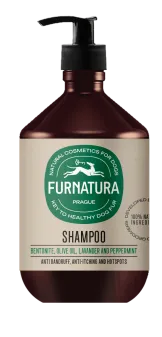
Anti dandruff, anti-itching and hotspots

Three size 2 in 1 brush for dogs
You can find everything you need to know about natural dog care in our comprehensive guide:
Natural Dog Care
Other articles you may find interesting:
All About Aromatherapy
How to Care for Your Dog's Coat
Dog Teeth and Everything You Need to Know About Them

